Memocept Official Website › Blog › What “Nootropic” Means
What “Nootropic” Actually Means — and What It Doesn’t
The word is on thousands of labels and it is not a regulatory category, not a standard, and not a claim anyone has to justify. Knowing what it does and does not commit a seller to is the most useful thing you can learn about this whole aisle, including the shelf this product sits on.

- It is not a legal category. No agency defines it, approves it or polices it. Anything can be called a nootropic.
- The original definition was strict and almost nothing on sale today would meet it.
- It tells you about marketing, not contents. The panel tells you about contents.
- Memocept is sold in this category and the word appears nowhere in our description of what it does, because it would not add anything true.
This is general information, not medical advice. Memocept is a dietary supplement. It is not a treatment for Alzheimer’s disease, dementia or any other cognitive condition, and it is not a substitute for prescribed medication. New or worsening memory problems are a reason to see a doctor, not a reason to buy a supplement.
Where the word came from
“Nootropic” was coined in the early 1970s by a Romanian chemist, Corneliu Giurgea, from Greek roots meaning roughly “mind-turning”. He attached it to a specific compound he had synthesised and, unusually, published criteria for what should qualify.
His definition required a substance to enhance learning and memory, protect the brain against physical or chemical injury, support the brain’s regulatory mechanisms, and — the demanding part — have very low toxicity and almost none of the side effects of conventional psychoactive drugs.
How far the word has drifted
Almost nothing sold as a nootropic today has been tested against those criteria, and most could not meet them if tested. The word has travelled from a technical term with a published standard to a shelf label meaning approximately “sold for the brain”.
That drift is not a scandal; it is what happens to useful words. It matters only because the original precision is still doing rhetorical work — the term sounds like it means something specific, and buyers reasonably assume it does.
What the word commits a seller to
Nothing. That is the entire answer, and it is worth sitting with.
| What buyers often assume | What is actually true |
|---|---|
| It is a defined product category | It is a marketing word with no legal status |
| Something was tested to earn the label | Nothing has to be tested at all |
| An agency checks the claim | No agency defines or reviews the term |
| It implies a cognitive effect | It implies an intended market |
| It implies safety | It implies nothing about safety either |
The FDA's questions and answers on dietary supplements sets out what the category as a whole is and is not reviewed for. “Nootropic” sits outside even that framework — it is a description sellers apply to themselves.
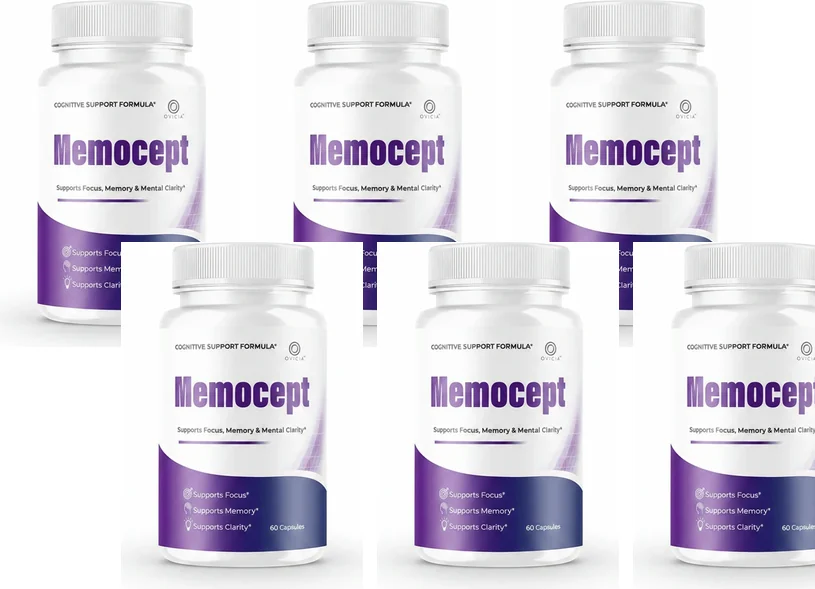
Described by its panel, not by a word.
Seven actives, the reasoning behind each, and the places the evidence stops. Six bottles is our lowest price per bottle, with sixty days to change your mind.
$294 — six bottles at $49 each
Order On The Official WebsiteFree US shipping · digital bonuses · 60-day money-back guarantee
The four things sold under one word
Products called nootropics have very little in common with each other, and lumping them together is how the word does its damage. Roughly, there are four groups.
1. Prescription medicines used off-label
Stimulants prescribed for attention disorders, and similar drugs, used by people without the diagnosis. These have real effects, real risks and real legal status. They are not supplements and nothing on this website is one.
2. Stimulant formulas
Caffeine, usually, sometimes under other names. They work quickly, which is why they feel convincing, and the effect is caffeine’s. Memocept contains none — covered at length in our post on that.
3. Botanical and nutrient formulas
Bacopa, ginkgo, B vitamins, amino acids. Slow, modest where anything is demonstrated at all, and the group Memocept belongs to. Effects here are measured over weeks on laboratory tasks, not felt over an afternoon.
4. Things with essentially no human evidence
A long tail of compounds with animal data, cell data or theory behind them and little else. Some may turn out to matter. Today they are hypotheses being sold as products.
A single word covering all four is not informative, and a buyer comparing group three against group one on the strength of a shared label is being misled by vocabulary rather than by any specific claim.
Stacks, and why they make everything harder to judge
The other habit this category has picked up is stacking — combining several products at once, often on the reasoning that if each does a little, together they do more. It is worth examining, because it is the single fastest way to make your own experience uninterpretable.
- You cannot attribute anything. Four products started in the same week means that if something changes, you have no idea which one did it — and if nothing changes, you have learned nothing about any of them.
- Doses add up invisibly. Caffeine, B vitamins and minerals all appear across multiple formulas, and no individual label shows you the total.
- Interactions multiply. Two supplements are one interaction question; five are ten, and nobody is checking them for you.
- Cost compounds faster than effect. Four modest products at $49 a month is a real budget for a set of effects each honestly described as small.
The alternative is unfashionable and works better: one thing at a time, for long enough to judge, with a note of what you were hoping would change. Our post on testing a stimulant-free formula sets out how to do that in a way that actually produces an answer.
What a pharmacist would ask you
Not “is this a good nootropic” but “what is the full list, and does anything on it interact with your prescriptions?” Keeping that list on your phone is the single most useful habit available to anyone buying in this aisle — and the ingredients page is there so you can show ours rather than recite it.
Five questions worth more than the word
- Which ingredients, in what amounts? If the amounts are not published, that is an answer too — and it is the answer for this product.
- Studied in whom? Results from older adults with measured decline do not transfer automatically to a healthy thirty-year-old.
- Measured how? A laboratory recall task is not the same as noticing a difference at work, and honest writing keeps the two apart.
- Over how long? Anything promising a same-day effect without a stimulant is making a claim its ingredients cannot support.
- What does it interact with? The question people skip, and the one a pharmacist is genuinely useful for.
NCCIH's research digest on supplements and cognitive function is the best neutral summary of how much this category has actually demonstrated, and their general supplement guidance is the right lens for any individual claim.
What an honest label in this category looks like
It is easier to criticise a word than to describe the alternative, so here is the standard we think is fair — and where this product lands against it.
| What to look for | Why it matters | Memocept |
|---|---|---|
| Every ingredient with its own amount | The only way to compare a product with its research | No — amounts not published |
| Stimulants declared plainly | Lets you total your day and judge the product fairly | Yes — there are none |
| Claims tied to named ingredients | Separates evidence from atmosphere | Yes — on the panel page |
| A lot code you can check | Ties the bottle in your hand to a record | Yes — on record |
| The finished product tested | The strongest possible evidence, and the rarest | No — no trial of this formula exists |
| Contact details that reach a person | The difference between a brand and a landing page | Yes — phone and email |
Four yes, two no. If full per-ingredient disclosure and a trial of the finished formula are your bar — and both are reasonable bars — then very little in this category clears them, this product included, and a single-ingredient product at a published dose is the better buy for that goal.
What actually helps cognition as you age
Having spent a page on a word, the honest close is the thing the word distracts from. The National Institute on Aging sets out what the evidence supports for cognitive health, and their summary on diet and Alzheimer's prevention is candid about how thin the supplement evidence is by comparison.
The list is familiar and unexciting: physical activity, sleep, blood pressure control, not smoking, staying socially and mentally engaged, and treating the conditions that damage blood vessels. Every item outranks anything in this bottle. None of them is sold by anyone.
The ODS consumer guide to dietary supplements puts the role of a product like this one plainly: an addition to a diet and a routine, not a replacement for either. That is the shelf Memocept sits on, and we would rather describe it accurately than reach for a word that sounds like more.
References
- National Institute on Aging. Cognitive health and older adults. https://www.nia.nih.gov/health/brain-health/cognitive-health-and-older-adults
- National Center for Complementary and Integrative Health. Dietary supplements and cognitive function, dementia, and Alzheimer's disease: what the science says. https://www.nccih.nih.gov/health/providers/digest/dietary-supplements-and-cognitive-function-dementia-and-alzheimers-disease-science
- National Institute on Aging. What do we know about diet and prevention of Alzheimer's disease? https://www.nia.nih.gov/health/alzheimers-and-dementia/what-do-we-know-about-diet-and-prevention-alzheimers-disease
- U.S. Food and Drug Administration. Questions and answers on dietary supplements. https://www.fda.gov/food/information-consumers-using-dietary-supplements/questions-and-answers-dietary-supplements
- National Center for Complementary and Integrative Health. Dietary and herbal supplements. https://www.nccih.nih.gov/health/dietary-and-herbal-supplements
- National Institutes of Health, Office of Dietary Supplements. Dietary supplements: what you need to know. https://ods.od.nih.gov/factsheets/WYNTK-Consumer/

Every page, every journal post, the bottle facts and the ingredients go through review by Dr. Patricia McKeon before they ship. We write these pages from the Memocept label and the manufacturer’s own lot paperwork, cite public nutrient references for every named active, and print “not published” wherever a figure is not disclosed rather than estimating it. Where an ingredient’s evidence sits in a different field from the one it is being sold for, we say so. Corrections are made on the page itself and the review date moves forward — write to [email protected]. Last reviewed September 2026 by Dr. Patricia McKeon.
A word that commits nobody to anything.
Read the panel instead. Ours is printed in full, including the part where the amounts are not published.
$294 — six bottles at $49 each
Order Memocept On The Official WebsiteFree US shipping · digital bonuses · 60-day money-back guarantee · lot MC26-NY5512