Memocept Official Website › How It Works
How Does Memocept Work? Three Routes Explained
Three routes, described the way the evidence describes them — including the gap between what these ingredients are studied for and what this product is sold for.
Memocept works through three routes in the body.
Niacin supports cellular energy metabolism, arginine and citrulline feed the nitric oxide pathway, and beta-alanine raises carnosine.
For daily directions, see how to take Memocept.
Niacin in Memocept, NAD and cellular energy
Niacin is an essential B vitamin. The body converts it into NAD and NADP, the coenzymes that carry electrons through energy metabolism in every cell — neurons very much included. the NIH Office of Dietary Supplements maintains the reference intakes (16 mg NE a day for adult men, 14 mg for adult women) and the 35 mg tolerable upper intake for supplemental forms.
What that means for a buyer. If your niacin intake is low, correcting it matters. If it is already adequate — which, in the United States, it usually is — extra niacin does not make a well-nourished brain work better, and there is no good evidence that it does.
The flush is the giveaway. Nicotinic acid causes vasodilation in the skin: a warm, red, sometimes itchy flush across the face, neck and chest, starting fifteen to thirty minutes after a dose. Two reviewers on this website describe exactly that in the first days. It tells you there is a real amount of niacin in the capsule, it is harmless, and taking it with food usually settles it.
Nitric oxide in Memocept: four ingredients, one pathway

The picture supplement marketing always reaches for
A glowing brain inside a translucent head is the stock image of this entire category, and it implies something specific: that the capsule is acting there, directly on neurons.
Read the panel and the implication does not hold. Four of the seven actives are arginine and citrulline — ingredients whose human trials measured blood pressure and cycling performance. The proposed link to cognition runs through blood vessels, not synapses: better vascular function, better cerebral perfusion, better thinking. That chain is plausible and its last link has not been demonstrated for this combination. An illustration cannot supply the missing evidence, so we have labelled it for what it is.
Arginine is the substrate that nitric oxide synthase turns into NO. Nitric oxide relaxes the smooth muscle in blood vessel walls, which widens them and increases flow. That is textbook physiology and nobody disputes it.
The complication is absorption. a 2008 pharmacokinetic study showed that oral L-arginine raises plasma arginine less reliably than L-citrulline does, because arginase in the gut and liver destroys much of it first. Citrulline skips that, is converted to arginine in the kidney, and delivers the substrate more effectively. Putting both on one panel is a defensible formulation choice and we will say so.
What the trials measured, though, is the point. 2019 meta-analysis pooled citrulline studies and found reductions in blood pressure. 2016 crossover trial found a 1.5% improvement in cycling time trial performance. These are cardiovascular and ergogenic endpoints. They are not memory tests.
The bridge, and its honest status. The argument for a cognitive benefit is that better vascular function means better cerebral perfusion, and better perfusion supports cognition. That is plausible and it is why this ingredient class appears in nootropic formulas at all. It is also an inference: we could not find controlled human trials showing that this arginine-and-citrulline combination improves memory or attention in healthy adults. If such trials exist, write to [email protected] and this page will be corrected and re-dated.
And then the doses. 3 to 9 grams a day of citrulline in the trials. 6 to 8 grams a serving for citrulline malate in sports nutrition. A single capsule holding seven ingredients has under a gram to distribute in total. This route is on the label at a small fraction of any amount that has been tested.
Beta-alanine in Memocept, and carnosine
Beta-alanine is the rate-limiting precursor for carnosine, a dipeptide that buffers acidity inside cells. The ISSN position stand on beta-alanine is clear about what that does: 4 to 6 g a day for two to four weeks raises muscle carnosine substantially and improves performance in efforts lasting one to four minutes.
Carnosine is present in the brain too, which is the basis for including it here. When that was tested directly, an exploratory 2015 study examining brain homocarnosine and cognitive function did not find the clear benefit the category implies. It is described by its own authors as exploratory.
The tingle is useful information. Paraesthesia — harmless prickling in the face, neck and hands — typically begins above roughly 0.8 g in a single dose. One reviewer here reports it once, early, then never again. If you feel it, there is a meaningful amount of beta-alanine in the capsule. If you never feel it, there probably is not much — and either way it is well under the 4–6 g the research uses.
And the route that is not on this page. The National Institute on Aging sets out what actually protects cognitive health across years: physical activity, sleep, blood pressure and diabetes control, hearing, social contact, and managing depression. On supplements, NCCIH’s research digest states plainly that none has been shown to prevent cognitive decline or dementia, and the National Institute on Aging says the same about diet and Alzheimer’s prevention. Memocept sits alongside those levers. It does not substitute for them.

Every page, every journal post, the bottle facts and the ingredients go through review by Dr. Patricia McKeon before they ship. We write these pages from the Memocept label and the manufacturer’s own lot paperwork, cite public nutrient references for every named active, and print “not published” wherever a figure is not disclosed rather than estimating it. Where an ingredient’s evidence sits in a different field from the one it is being sold for, we say so. Corrections are made on the page itself and the review date moves forward — write to [email protected]. Last reviewed September 2026 by Dr. Patricia McKeon.
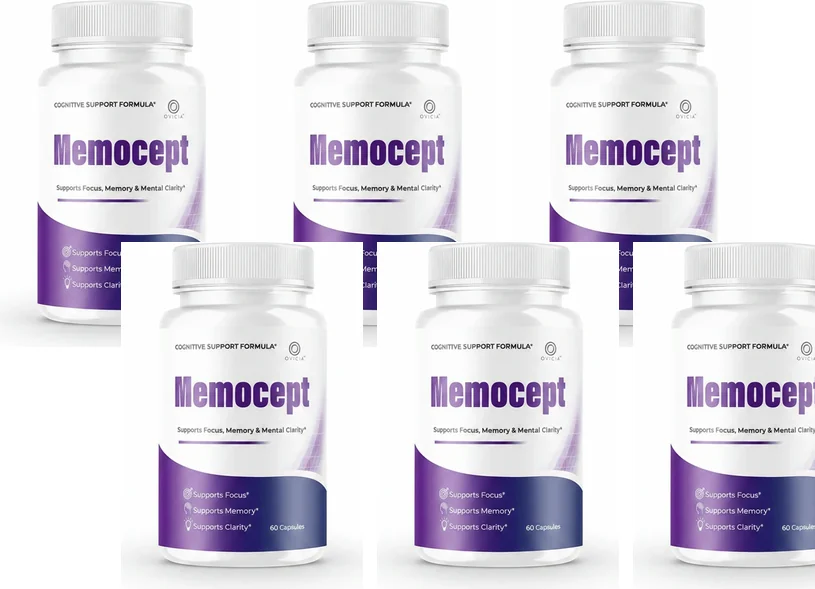
Memocept: a stimulant-free capsule, honestly described.
If that is what you were looking for, the six-bottle pack is the sensible rate; if you are unsure, two bottles costs less to find out with.
$294 — six bottles at $49 each
Order Memocept On The Official WebsiteFree US shipping · digital bonuses · 60-day money-back guarantee · lot MC26-NY5512