Memocept Official Website › Blog › Beta-Alanine
Beta-Alanine: What It Does, and What It Does Not Do for Memory
Beta-alanine is the best-evidenced ingredient on this panel — for high-intensity exercise. Its cognitive record is thin, and the tingling you may feel is not it working on your brain.

- What it does: raises muscle carnosine, which buffers acid during high-intensity effort lasting roughly one to four minutes.
- Trial doses are measured in grams a day, taken for weeks.
- The tingling is paraesthesia — harmless, dose-related, and not a sign of anything working.
- Brain effects are exploratory. One small study looked; the literature has not settled anything.
This is general information, not medical advice. Memocept is a dietary supplement. It is not a treatment for Alzheimer’s disease, dementia or any other cognitive condition, and it is not a substitute for prescribed medication. New or worsening memory problems are a reason to see a doctor, not a reason to buy a supplement.
What beta-alanine actually does
Beta-alanine is a non-essential amino acid whose job in a supplement is to raise carnosine levels in muscle. Carnosine buffers the acid that builds up during hard effort, which delays the point at which the muscle gives out.
The International Society of Sports Nutrition position stand is the reference document here, and it is unusually clear: the ergogenic benefit is concentrated in high-intensity exercise lasting roughly one to four minutes. That is a real, specific and well-replicated finding.
The dose the research uses
| In the research | On this label | |
|---|---|---|
| Daily amount | Measured in grams | Not published |
| Duration | Several weeks to load muscle carnosine | Your choice |
| Studied outcome | High-intensity exercise capacity | — |
| Studied for memory | Exploratory only | — |
The manufacturer does not publish per-ingredient amounts, so nobody can tell you whether the beta-alanine here approaches a gram-level dose. That limitation is printed on every entry of the ingredients page rather than glossed over.
The one-to-four-minute window, and why it is so specific
The ISSN position stand does not say beta-alanine improves exercise. It says something much more precise, and the precision is the interesting part.
Efforts lasting roughly one to four minutes are the ones limited by acid build-up. A five-second sprint ends before acid becomes the constraint; an hour-long run is limited by fuel and endurance instead. In between sits a window — a 400 to 1500 metre run, a 100 to 200 metre swim, a hard interval, the last set of a long circuit — where buffering capacity is genuinely the thing standing between you and stopping.
That is what raising muscle carnosine addresses, and it is why the finding replicates: the mechanism and the measured outcome line up exactly.
What that specificity tells you about everything else
It is a useful yardstick. Strong supplement evidence usually looks like this — a named mechanism, a narrow outcome, a dose range, and results that hold up across groups. Weak evidence looks like a broad claim with no boundary: helps energy, supports focus, promotes wellbeing.
Beta-alanine has the strong shape for exercise and the weak shape for cognition, and it is the same ingredient in both cases. The difference is entirely in what was measured.
Why it makes you tingle
Beta-alanine at higher doses causes paraesthesia — a tingling or prickling, usually in the face, neck and hands, starting within about fifteen minutes and fading within an hour or so. It is harmless, it is dose-related, and it happens whether or not the supplement is doing anything useful.
Two practical points. If you feel it, that only tells you the dose was above your personal threshold. And if you find it unpleasant, splitting the dose across the day is the usual remedy — but with an undisclosed amount in a blend, the simpler answer is to stop and use the guarantee.
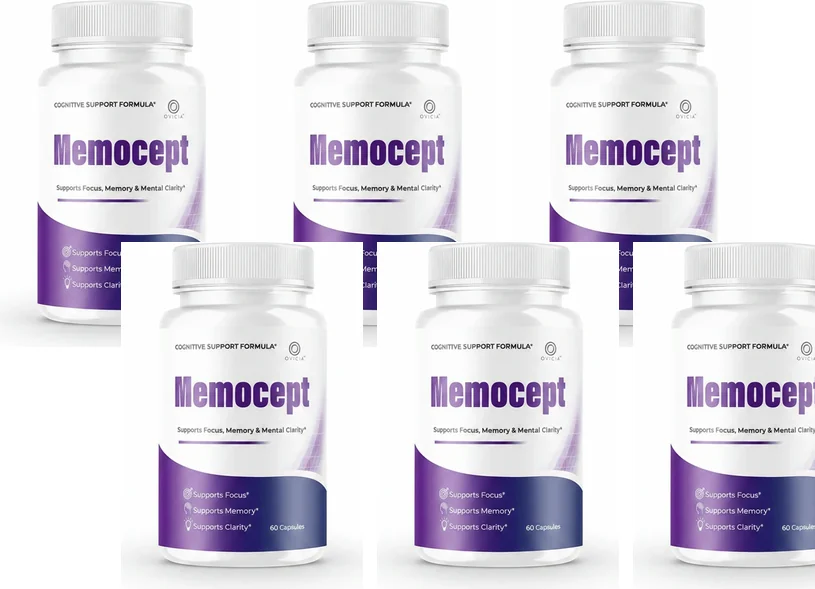
Nothing here is a secret.
The strong evidence, the weak evidence and the undisclosed amounts are all on the same page. Six bottles is our lowest price, with sixty days to decide.
$294 — six bottles at $49 each
Order On The Official WebsiteFree US shipping · digital bonuses · 60-day money-back guarantee

What carnosine actually is, and why the brain came up at all
The step from muscle to brain is not arbitrary, and understanding why it was ever proposed makes it easier to see how far the evidence has and has not travelled.
Beta-alanine’s job is to be the rate-limiting half of carnosine — a dipeptide your body assembles from beta-alanine and histidine. Histidine is plentiful; beta-alanine is the bottleneck, which is why supplementing it raises carnosine and supplementing histidine does not.
Carnosine is found in muscle in quantity. It is also present in brain tissue, in much smaller amounts, and it has properties — buffering, antioxidant activity, metal ion binding — that are interesting wherever they occur. That is the entire basis of the cognitive hypothesis: a compound with useful properties exists in the brain, and supplementation raises it in muscle, so perhaps it raises it in brain.
Why “perhaps” is doing a lot of work
- The blood-brain barrier is selective. Raising something in blood does not reliably raise it in brain tissue.
- The amounts differ enormously. Brain carnosine sits far below muscle carnosine; a proportional increase is a smaller absolute one.
- Buffering matters most where acid accumulates. That is working muscle during hard effort, not a brain at a desk.
- One exploratory study is a starting point. The 2015 work is described that way by its own authors.
None of this makes the hypothesis silly. It makes it a hypothesis, and a page selling the ingredient is exactly the place where that distinction is most likely to be blurred and most important to keep.
The brain evidence, such as it is
A 2015 exploratory study examined beta-alanine supplementation and brain carnosine, and it is exactly what its own authors call it: exploratory. It is not a memory trial, it does not establish a cognitive benefit, and a single small study is not a basis for a claim.
NCCIH's research digest on supplements and cognitive function is the broader picture, and it does not support strong claims for this category as a whole. NCCIH's general supplement guidance is the right lens for anything you read about an ingredient like this one, including what we write.
What that means on this label
- Do not buy Memocept for beta-alanine's memory effect. There is not a demonstrated one.
- Do not dismiss the ingredient either. It has the cleanest evidence base on the panel — for a different outcome.
- Expect possible tingling, and know what it is if it happens.
- Judge the product at four weeks, not four days, and use the guarantee if the answer is no.
- Do not treat the tingling as a dose gauge. Sensitivity to paraesthesia varies widely between people and tells you nothing about how much is in a capsule.
Questions go to +1 (507) 448-8190 or [email protected]. We answer them ourselves.
Practical notes if you take it
Whatever it is or is not doing for cognition, beta-alanine is in this bottle and behaves in predictable ways. A few things are worth knowing in advance.
- Take it with food. Reduces stomach upset, and slows absorption slightly, which tends to reduce the tingling too.
- Timing barely matters. Carnosine loading is about cumulative daily intake over weeks, not about hitting a window. Take it when you will remember to.
- The tingling fades with continued use for most people, and its absence never means the supplement stopped working — it was never a signal of that.
- It is not a pre-workout. Nothing about beta-alanine acts acutely. If you feel something before training, that is expectation or whatever else you took.
- Stacking is where the dose question bites. If you also take a sports supplement, you may be getting gram-level beta-alanine from that and an undisclosed amount from this. Adding them up is impossible here, which is a fair reason to pick one.
Why the amount here cannot be checked
Every figure in this post — grams a day, weeks of loading, the tingling threshold — comes from research that stated its dose. Memocept does not. The label names beta-alanine and does not say how much, which is legal, common, and the reason no one can tell you whether this bottle is anywhere near a studied amount.
What follows is worth stating plainly, because it is the kind of sentence a product website normally avoids. If gram-level beta-alanine is what you are after, this is not the way to buy it: a single-ingredient product with a printed dose is. What a panel like this offers instead is seven ingredients at one price in one capsule, and whether that trade is worth $49 a bottle is a judgement only you can make — with the 60-day guarantee as the backstop if it is not.
Who should ask first
Beta-alanine is generally well tolerated in healthy adults, and the paraesthesia is the main complaint rather than a safety signal. As with everything on this panel, the people who should ask a pharmacist before starting are those on prescription medication, those with a diagnosed condition, and anyone with surgery booked within two weeks. That list is on the FAQ and in the footer of every page here.
References
- Trexler ET, Smith-Ryan AE, Stout JR, et al. International Society of Sports Nutrition position stand: beta-alanine. Journal of the International Society of Sports Nutrition. 2015. https://www.ncbi.nlm.nih.gov/pmc/articles/PMC4501114/
- Solis MY, Cooper S, Hobson RM, et al. Effects of beta-alanine supplementation on brain homocarnosine/carnosine signal and cognitive function: an exploratory study. PLoS ONE. 2015. https://www.ncbi.nlm.nih.gov/pmc/articles/PMC4397072/
- National Center for Complementary and Integrative Health. Dietary supplements and cognitive function, dementia, and Alzheimer's disease: what the science says. https://www.nccih.nih.gov/health/providers/digest/dietary-supplements-and-cognitive-function-dementia-and-alzheimers-disease-science
- National Center for Complementary and Integrative Health. Dietary and herbal supplements. https://www.nccih.nih.gov/health/dietary-and-herbal-supplements

Every page, every journal post, the bottle facts and the ingredients go through review by Dr. Patricia McKeon before they ship. We write these pages from the Memocept label and the manufacturer’s own lot paperwork, cite public nutrient references for every named active, and print “not published” wherever a figure is not disclosed rather than estimating it. Where an ingredient’s evidence sits in a different field from the one it is being sold for, we say so. Corrections are made on the page itself and the review date moves forward — write to [email protected]. Last reviewed September 2026 by Dr. Patricia McKeon.
Strong evidence, different question.
That is the honest summary of beta-alanine on a memory panel — and the sort of sentence we would rather print than leave out.
$294 — six bottles at $49 each
Order Memocept On The Official WebsiteFree US shipping · digital bonuses · 60-day money-back guarantee · lot MC26-NY5512